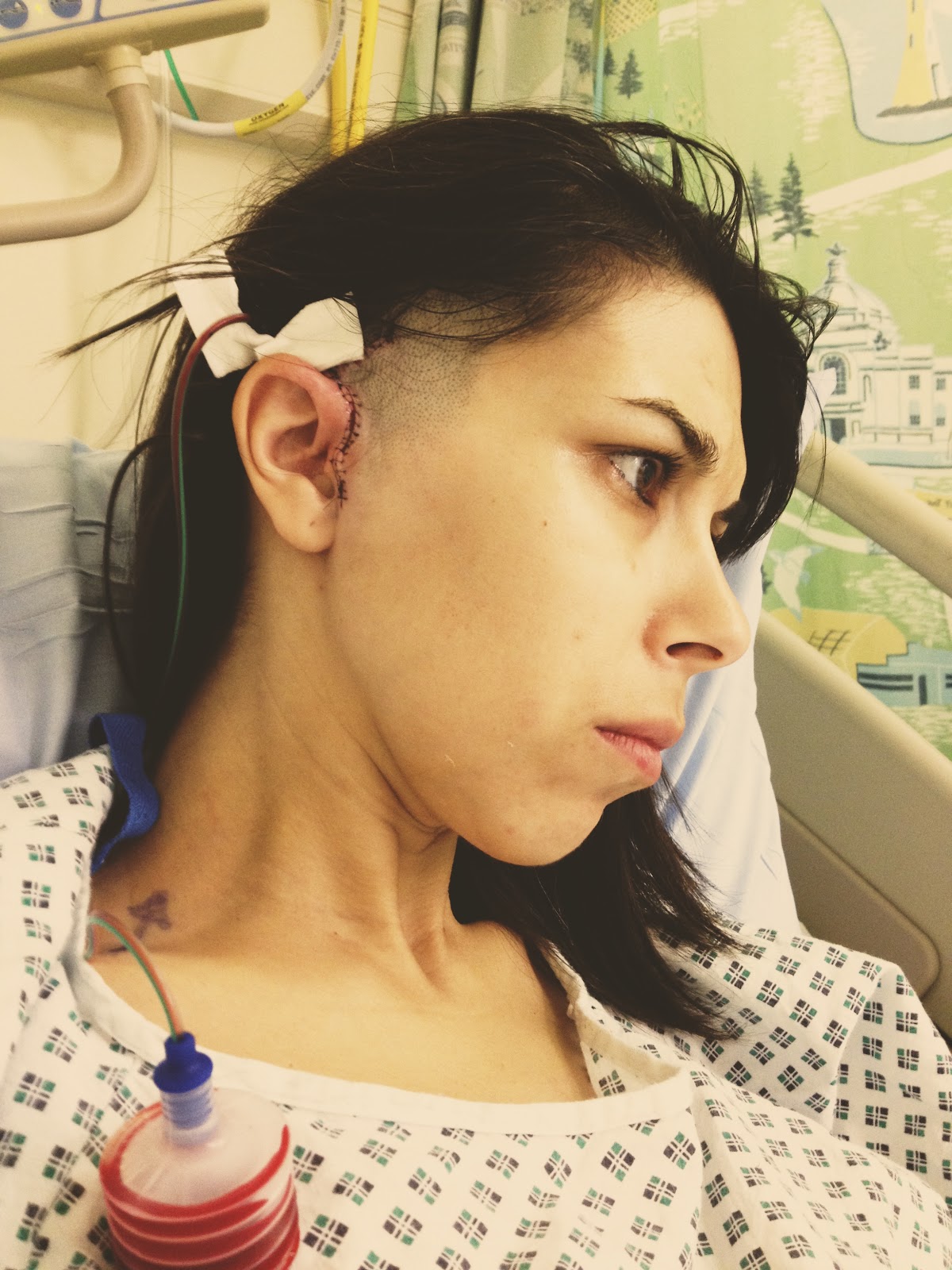
Showing posts with label temporomandibular joint. Show all posts
Tuesday, 6 November 2012
Click click click
This is my little companion.
For the past month wherever I go, the little fella goes.
Call me crazy, but I've been keeping a record of the clicks and cracks of my right TMJ.
On my last medical appointment with Mr. C. I was told that if my current condition does not improve until January, another surgery may be considered to recapture the disc. Straight after that appointment I started paying more attention to my TMJ clicking and crepitus - what kind of clicks it makes, when does it click, how many times it clicks?
If I want to know exactly how my TMJ is evolving (if it is getting better or worse), keeping track of the two main symptoms - pain and clicking - may help me understand. However, pain is very subjective and quite hard to quantify. It depends on a long list of factors, and each person feels it differently. Taking pain medication constantly makes pain quantification even more difficult, as it masks the real symptoms. Quantifying clicks is a lot easier and requires only two things: a tally counter and a notebook. Every time my TMJ clicks, I click the counter. I take note of the number of clicks before the two main meals (lunch and dinner) and in the end of the day, covering the morning, afternoon and evening periods. For the same time intervals I classify my TMJ pain from 1 to 10, according to this table.
Because my disc is anteriorly displaced, the TMJ clicks upon mouth opening. This doesn't mean that whenever I open my mouth, the TMJ clicks. A lot of times it doesn't - it depends how wide I open my mouth, how much pressure I am putting on the TMJ, what I am doing (biting, chewing, swallowing, talking), what I eat, etc. However, taking into account that my days are pretty much the same, following the same routine, soft-food dieting, talking and laughing roughly the same amount each day, the daily sum of clicks should remain around a certain value. It is only based on this assumption that I can compare different days and trace an evolution trend.
There are different kinds of clicks. The ones I get the most only I can hear them, although they are easily felt when pressing a finger on the joint. Louder clicks (or pops) are less frequent, and can be heard by anyone standing up to a few meters away from me. They sound like fingers being cracked or chicken leg bones being broken. The loud clicks produce an immediate relief on my TMJ discomfort, just like a dislocated bone being brought back into place. Unfortunately it is a temporary relief. Crepitus is always present whenever I move the lower jaw, a continuos grating sound - the reason why mouth movement is not smooth and feels like a old wooden door being open. I only count clicks, not crepitus noises.
So far it looks like this:
Fitting a trend to the data, it appears that the amount of clicks is increasing with time. But what is the significance of this? Could my TMJ be gradually getting worse?
As for the pain, I am slowly increasing the amount and strength of the medication. Sometimes it aggravates after a major click - I feel a pulsing electric pain spreading from the TMJ towards the rest of the face and head. Could be another sign of worsening... Could be due to the "great" british weather...
What do you think?
Monday, 5 November 2012
Recovering
In the past months I haven't been the best blogger, or the best company, or the best person to reply to any of the lovely and supportive messages I have been receiving... Shame on me...
However, I have a good excuse - I have been "too busy" recovering! HA!
I did my best to maintain a small diary in which I wrote everything regarding my post-op experience. I had great expectations about this little fella - it would be the most extensive and complete post-op report of all times!...
But three days after... I surrendered to the tiredness, general drowsiness, and lack of inspiration and willingness to do anything at all that is so common (at least I hope so!) after surgery. *sigh*
Have I ever mentioned that despite being the best guy ever, Davide is also a bit hypochondriac and a chronic worrier? Well, I found out that all his hourly questions of "how are you feeling? how's the pain? where is the pain? how much is the pain? why are you making that face - is it hurting?" were only to fill in his own diary. Oh, bless him! He's the best! ♥
The past months can be summarised by a single word: tough. In every way...
I arrived home from the hospital at around 10:30. I felt lost at home. It felt like I had been away for weeks, although little more than 24 hours had passed. I was feeling quite well, as the pain was being controlled by the medication, and I was surprisingly alert. The last thing I wanted to do was spending the day in bed, resting and being bored to death. But that was exactly how I spent that day, and the ones after.
The pain kicked in on day 2. The whole right side of my head was aching terribly - some of the severest pains I ever had to endure. It remained like this for the following three days, and I was only able to cope thanks to my good old friend tramadol (8x 50mg daily) and strong ibuprofen (3x 400mg daily), combined with paracetamol. Slowly the pain started to ease, but TMJ discomfort and swelling increased significantly. The swelling was pushing the lower jaw forward (creating a slight underbite) and to the left, affecting my bite. I could barely open my mouth (12mm maximum), it interfered with my speech, and swallowing was very hard.
A week after the surgery I felt a lot better. In fact, for the first time in 380 days I felt I didn't need to take pain drugs. And so I didn't. That was the stupidest thing I have ever done.
Being addicted to tramadol, my body didn't react very well when I decided not to take it. Especially taking into account that only a week had past since the surgery... In the end of the day, my body started to shut down. I was unable to stand, my speech was incoherent, I was shivering, soaked in sweat, and extremely sick. Soon I was throwing up all the contents of my stomach and much more... Needless to say, the TMJ pain came back must worse, and I was in bed again for the next couple of days, taking each pill as a bless.
On the ninth day after surgery the stitches were removed, and it was such a relief! With all the swelling, they became really uncomfortable as if my face skin was being pulled backwards. Although the stitches stung from time to time, the wound and the tissues surrounding it were completely numb. As time passes, I am slowly recovering some of the sensations around the scar, but the skin is still pretty much numb to the touch. The scar however has healed beautifully! It is almost impossible to notice it.
A month after surgery, the pain had decreased, the swelling was gone, my mouth opening increased slightly, and I was eating normally again (although mostly soft foods). It was time to reduce my tramadol intake - this time gradually. This proved to be quite a struggle. It has been a long and stressful process, and I feel it may have slowed down the whole recovery, as it is one more thing my body has to cope with, heal and adapt. Currently I am taking only 50mg of tramadol a day. I wish I could decrease the dosage even further and eventually withdraw it completely, but unfortunately it is impossible at the moment...
Six weeks after the eminectomy, a consultation with my surgeon (Mr. C.) confirmed my fears - the disc is still anteriorly displaced. The diagnosis improved from without reduction to with reduction (explained here), but the disc is still out of place. Hence the constant pain I still feel (although far more tolerable and manageable than before), the extreme discomfort inside the TMJ (I feel as if my lower jaw is out of place, not fitting properly on the right side), and the pretty bad and annoying TMJ clicking and crepitus. If my current condition does not improve until my next medical appointment (January 2013), another surgery may be considered to recapture the disc. It is frustrating to think that all could've been solved if my surgeon wasn't so conservative during the eminectomy, if only he had opened the joint capsule to check the disc. But that wasn't the goal of this surgery. Despite it all, I must say the eminectomy improved my condition significantly, and that for me was a great achievement!
I still feel pain and still take pain medication. In bad weather days I stay at home, as they make me feel terribly. I get tired very easily and can't do anything physically demanding. I can't bite an apple or chew a steak.
But I'm back to work and I ate pizza just the other day. :)
However, I have a good excuse - I have been "too busy" recovering! HA!
I did my best to maintain a small diary in which I wrote everything regarding my post-op experience. I had great expectations about this little fella - it would be the most extensive and complete post-op report of all times!...
But three days after... I surrendered to the tiredness, general drowsiness, and lack of inspiration and willingness to do anything at all that is so common (at least I hope so!) after surgery. *sigh*
Have I ever mentioned that despite being the best guy ever, Davide is also a bit hypochondriac and a chronic worrier? Well, I found out that all his hourly questions of "how are you feeling? how's the pain? where is the pain? how much is the pain? why are you making that face - is it hurting?" were only to fill in his own diary. Oh, bless him! He's the best! ♥
| Post-op day 1 |
The past months can be summarised by a single word: tough. In every way...
I arrived home from the hospital at around 10:30. I felt lost at home. It felt like I had been away for weeks, although little more than 24 hours had passed. I was feeling quite well, as the pain was being controlled by the medication, and I was surprisingly alert. The last thing I wanted to do was spending the day in bed, resting and being bored to death. But that was exactly how I spent that day, and the ones after.
The pain kicked in on day 2. The whole right side of my head was aching terribly - some of the severest pains I ever had to endure. It remained like this for the following three days, and I was only able to cope thanks to my good old friend tramadol (8x 50mg daily) and strong ibuprofen (3x 400mg daily), combined with paracetamol. Slowly the pain started to ease, but TMJ discomfort and swelling increased significantly. The swelling was pushing the lower jaw forward (creating a slight underbite) and to the left, affecting my bite. I could barely open my mouth (12mm maximum), it interfered with my speech, and swallowing was very hard.
| Post-op day 5 |
A week after the surgery I felt a lot better. In fact, for the first time in 380 days I felt I didn't need to take pain drugs. And so I didn't. That was the stupidest thing I have ever done.
Being addicted to tramadol, my body didn't react very well when I decided not to take it. Especially taking into account that only a week had past since the surgery... In the end of the day, my body started to shut down. I was unable to stand, my speech was incoherent, I was shivering, soaked in sweat, and extremely sick. Soon I was throwing up all the contents of my stomach and much more... Needless to say, the TMJ pain came back must worse, and I was in bed again for the next couple of days, taking each pill as a bless.
On the ninth day after surgery the stitches were removed, and it was such a relief! With all the swelling, they became really uncomfortable as if my face skin was being pulled backwards. Although the stitches stung from time to time, the wound and the tissues surrounding it were completely numb. As time passes, I am slowly recovering some of the sensations around the scar, but the skin is still pretty much numb to the touch. The scar however has healed beautifully! It is almost impossible to notice it.
| Can you see it? |
A month after surgery, the pain had decreased, the swelling was gone, my mouth opening increased slightly, and I was eating normally again (although mostly soft foods). It was time to reduce my tramadol intake - this time gradually. This proved to be quite a struggle. It has been a long and stressful process, and I feel it may have slowed down the whole recovery, as it is one more thing my body has to cope with, heal and adapt. Currently I am taking only 50mg of tramadol a day. I wish I could decrease the dosage even further and eventually withdraw it completely, but unfortunately it is impossible at the moment...
Six weeks after the eminectomy, a consultation with my surgeon (Mr. C.) confirmed my fears - the disc is still anteriorly displaced. The diagnosis improved from without reduction to with reduction (explained here), but the disc is still out of place. Hence the constant pain I still feel (although far more tolerable and manageable than before), the extreme discomfort inside the TMJ (I feel as if my lower jaw is out of place, not fitting properly on the right side), and the pretty bad and annoying TMJ clicking and crepitus. If my current condition does not improve until my next medical appointment (January 2013), another surgery may be considered to recapture the disc. It is frustrating to think that all could've been solved if my surgeon wasn't so conservative during the eminectomy, if only he had opened the joint capsule to check the disc. But that wasn't the goal of this surgery. Despite it all, I must say the eminectomy improved my condition significantly, and that for me was a great achievement!
I still feel pain and still take pain medication. In bad weather days I stay at home, as they make me feel terribly. I get tired very easily and can't do anything physically demanding. I can't bite an apple or chew a steak.
But I'm back to work and I ate pizza just the other day. :)
Thursday, 16 August 2012
The surgery
Monday, August 13th 2012 - the day of my right TMJ eminectomy.
Contrary to my expectations, I was able to sleep a few hours before the surgery. I guess the tiredness of several sleepless nights took its toll. I woke up at 06:00, had a quick shower and prepared the last few things to take to the hospital. At 07:00, I called the Short Stay Surgical Unit and I was asked to go straight to the University Hospital of Wales (Cardiff) as I was the first on Mr. C.'s list of surgeries for the day. Davide and I arrived at the ward just before 07:30, and shortly after I was called inside, barely having time to properly squeeze Davide in my arms.
The nurse in charge of my case was very nice and kind. As she walked with me to my room, she started explaining what would happen before the surgery. There were some measurements and tests to be taken (temperature, blood pressure, pulse, oxygen levels, urine sample, weight and height), a long questionnaire to be filled, the anaesthesia consultation, a short visit from the one of my surgeons, and the hospital gown to dress, including special socks to prevent blood clogs. Before 08:30 I was picked up from my room to the anaesthesia ward. The anaesthetist was really nice and explained me every single stage of inducing me to sleep intravenously. After this, she would intubate me and give me local anaesthetics for the surgery. "I'll start injecting the general anaesthetics now, ok? Just relax, sweetheart. You can now start dreaming about your next vacations." She smiled and winked her eye. Those were the last words I heard.
I dreamt. I definitely dreamt during surgery. I can't recall the dream, but I woke up with the feeling it had been pleasant. Perhaps I dreamt about our next vacations.
I was awake by a nurse at the recovery room. She called my name and touched my shoulder. As I opened my eyes, she asked me if I knew where I was and what had happened. "I just came out of surgery." "Yes, very good!", she said. I think both of us were surprised how much alert I was. All the area surrounding the right TMJ was hurting, and she gave me a light dose of morphine (5mg) with paracetamol intravenously. She took measurements (temperature, blood pressure, pulse, oxygen levels) at short periods of time to ensure I was well. Since I wasn't nauseated or feeling sick, the drip bag was removed from my left hand. On my right shoulder I noticed the drain, which was well secured with tape and stitches on the head. It was half full of blood and it didn't bother me at all. It actually made me smile - it looked just like a small red chinese lantern, hanging from the right side of my head.
"What's the time, please?", I asked. "11:20, dear." It seemed quite late to me. The surgery was expected to last only one hour, meaning I would be out at around 10:00. This thought made me worry about what might've happened during the surgery. Was it more complicated than what was initially expected? How was the disc? How was the disc? That was my main concern... I asked the nurse if she knew how anything about the surgery, but she was only able to tell me that all went well. She assured me that soon a member of the surgical team would come to check on me, and hopefully give me more information.
As I was responding well and my vital signs were good, I left the recovery room around twenty minutes later. I was moved to a different room from the one I was given before. I was now at the children's surgical unit, but just for a while - I would be moved back to my first room later.
I saw my bag near the bed, reached for my mobile phone and text Davide "I had a really nice nap :)", with a few other details. Davide had called the Short Stay Surgical Unit at 11:00, and just like myself, he was surprised when the nurse informed him that I was still in the operation theatre. However, he was quite happy to know I was out and doing well. I sent him a couple of photos of my head and he made me company through text messages - it was a bit hard for me to talk on the phone. Meanwhile, the pain was increasing and I was given 100mg of tramadol and 1000mg of paracetamol, as the anaesthetics were wearing off. My throat was also horribly sore due to surgery intubation, but there was nothing the nurse could give to help me on this. My mouth also felt extremely dry, so I kept drinking sips of water and hydrating the lips with vaseline.
The inside of the TMJ felt (and it still feels) slightly swollen and spongy, with extra volume between bones. I couldn't close my mouth fully, due to this extra volume. The teeth remained slightly separated and on a clearly different position than before - upper and lower front teeth aligned along the same vertical plane (before the lower teeth were slightly behind the upper). In this new position, if I forced the teeth to touch, only the front teeth did so - the back teeth didn't contact with each other to bite.
The first visit from the surgical team was around 13:00, by two surgeons that I had met before. I was told all went very well. The disc returned to its position above the condyle on its own, and remained so without being necessary to touch it or secure it. The eminence was smoothed really nicely. These were great news! I felt such a relief by knowing they didn't have to touch the disc at all! I was asked to open my mouth as wide as I could. I did my best, but the surgeons were not impressed. According to what I was told, this was certainly related with swelling inside the joint. They were confidant it will improve with time, as right after the eminence removal they were able to open my mouth much wider. The lower jaw shifts slightly to the right side upon mouth opening, as expected and as it was previously. They also asked me to frown and do some other facial expressions to check if I had any nerve paralysis. Despite being painful, I gave them the widest smile I could when they confirmed no nerve damage. They assured me that later in the evening I would get another visit from the team and, depending how well the wound was being drained, I would be discharged in the morning.
Visiting hours were from 17:00 to 21:00, and during this period Davide never left me. He helped me put on my pyjama, he arranged everything in my room area so I could have easy access to my things, he brought my favourite yogurt to eat and straws to drink water, he surprised me with the iPhone cover I feel in love with just a few days before, he got me the sweetest and funniest card ever to make me smile, and he made me feel much better.
At around 18:30, I got the second visit from the surgical team and two intravenous antibiotics were introduced to my medication list, together with an abdominal injection to prevent blood clogs. Due to their thick consistency, the antibiotics had to be diluted on a small bag of saline solution, injected slowly through my left hand tubing, and flushed afterwards with another small drip bag of saline solution.
The nurses came to turn off the lights at around 22:30. However, I couldn't sleep or rest because of the pain. To control it, I had to be given 5mg of morphine, with 100mg tramadol and 1000mg paracetamol, twice during the night. To keep my mind away from the pain, I started taking notes regarding the recovery process. Here is how I described the pain during the first 24 hours post-op:
The pain is completely different from what I have been having in the past year. It seems to me that it is not related to my previous symptoms. The pain is only associated with the wound and inside the joint, where tissues and bone were worked on. It flares up to pain levels of 8+ for short periods from time to time, but it remains mostly a deep 6-7. Pain drugs bring it down to comfortable levels of 3-4 maximum. Few of the stitches sting every now and again, but it is no big deal. I don't feel any of the pain I previously had along the branches and ends of the trigeminal nerve. No facial or head pain, apart from around the wound.
The night went by, and in the morning I had the surgeon's visit prior to discharge. The recovery was going very well. According to what I was told, the pain, the changes in bite and the small clicking noises are natural and shall improve with time. Some other details of the surgery were also explained - the joint capsule wasn't cut to expose the TMJ, as smoothing the eminence was enough to allow normal functioning of the joint, which avoided a much more invasive surgery. These were great news! However, there is a downside to this - the condition of the disc and condyle wasn't checked. We must hope they are healthy enough to maintain the TMJ functioning properly in the future.
My medication was checked once more: co-amoxiclav 500/125mg with penicillin (antibiotic) and 400mg ibuprofen (anti-inflammatory) were prescribed to be taken three times daily for the following five days. As for the pain, I continue taking 8x 50mg tramadol and 8x 500mg paracetamol daily.
After the visit, the drain - my little red chinese lantern - was removed, only with a minor discomfort and bleeding. With the nurse's permission, Davide came in to help me get dressed and pack my things.
We left the hospital after thanking all the nurses for their hard work, their tireless efforts to look after me and make me feel better, and their endless kindness when I needed the most.
Few minutes later, I arrived home for a week of post-op pain, swelling and discomfort.
Thank you all for your kind words and support! They mean more to me than I can describe!
Contrary to my expectations, I was able to sleep a few hours before the surgery. I guess the tiredness of several sleepless nights took its toll. I woke up at 06:00, had a quick shower and prepared the last few things to take to the hospital. At 07:00, I called the Short Stay Surgical Unit and I was asked to go straight to the University Hospital of Wales (Cardiff) as I was the first on Mr. C.'s list of surgeries for the day. Davide and I arrived at the ward just before 07:30, and shortly after I was called inside, barely having time to properly squeeze Davide in my arms.
The nurse in charge of my case was very nice and kind. As she walked with me to my room, she started explaining what would happen before the surgery. There were some measurements and tests to be taken (temperature, blood pressure, pulse, oxygen levels, urine sample, weight and height), a long questionnaire to be filled, the anaesthesia consultation, a short visit from the one of my surgeons, and the hospital gown to dress, including special socks to prevent blood clogs. Before 08:30 I was picked up from my room to the anaesthesia ward. The anaesthetist was really nice and explained me every single stage of inducing me to sleep intravenously. After this, she would intubate me and give me local anaesthetics for the surgery. "I'll start injecting the general anaesthetics now, ok? Just relax, sweetheart. You can now start dreaming about your next vacations." She smiled and winked her eye. Those were the last words I heard.
I dreamt. I definitely dreamt during surgery. I can't recall the dream, but I woke up with the feeling it had been pleasant. Perhaps I dreamt about our next vacations.
I was awake by a nurse at the recovery room. She called my name and touched my shoulder. As I opened my eyes, she asked me if I knew where I was and what had happened. "I just came out of surgery." "Yes, very good!", she said. I think both of us were surprised how much alert I was. All the area surrounding the right TMJ was hurting, and she gave me a light dose of morphine (5mg) with paracetamol intravenously. She took measurements (temperature, blood pressure, pulse, oxygen levels) at short periods of time to ensure I was well. Since I wasn't nauseated or feeling sick, the drip bag was removed from my left hand. On my right shoulder I noticed the drain, which was well secured with tape and stitches on the head. It was half full of blood and it didn't bother me at all. It actually made me smile - it looked just like a small red chinese lantern, hanging from the right side of my head.
"What's the time, please?", I asked. "11:20, dear." It seemed quite late to me. The surgery was expected to last only one hour, meaning I would be out at around 10:00. This thought made me worry about what might've happened during the surgery. Was it more complicated than what was initially expected? How was the disc? How was the disc? That was my main concern... I asked the nurse if she knew how anything about the surgery, but she was only able to tell me that all went well. She assured me that soon a member of the surgical team would come to check on me, and hopefully give me more information.
As I was responding well and my vital signs were good, I left the recovery room around twenty minutes later. I was moved to a different room from the one I was given before. I was now at the children's surgical unit, but just for a while - I would be moved back to my first room later.
I saw my bag near the bed, reached for my mobile phone and text Davide "I had a really nice nap :)", with a few other details. Davide had called the Short Stay Surgical Unit at 11:00, and just like myself, he was surprised when the nurse informed him that I was still in the operation theatre. However, he was quite happy to know I was out and doing well. I sent him a couple of photos of my head and he made me company through text messages - it was a bit hard for me to talk on the phone. Meanwhile, the pain was increasing and I was given 100mg of tramadol and 1000mg of paracetamol, as the anaesthetics were wearing off. My throat was also horribly sore due to surgery intubation, but there was nothing the nurse could give to help me on this. My mouth also felt extremely dry, so I kept drinking sips of water and hydrating the lips with vaseline.
The inside of the TMJ felt (and it still feels) slightly swollen and spongy, with extra volume between bones. I couldn't close my mouth fully, due to this extra volume. The teeth remained slightly separated and on a clearly different position than before - upper and lower front teeth aligned along the same vertical plane (before the lower teeth were slightly behind the upper). In this new position, if I forced the teeth to touch, only the front teeth did so - the back teeth didn't contact with each other to bite.
Visiting hours were from 17:00 to 21:00, and during this period Davide never left me. He helped me put on my pyjama, he arranged everything in my room area so I could have easy access to my things, he brought my favourite yogurt to eat and straws to drink water, he surprised me with the iPhone cover I feel in love with just a few days before, he got me the sweetest and funniest card ever to make me smile, and he made me feel much better.
At around 18:30, I got the second visit from the surgical team and two intravenous antibiotics were introduced to my medication list, together with an abdominal injection to prevent blood clogs. Due to their thick consistency, the antibiotics had to be diluted on a small bag of saline solution, injected slowly through my left hand tubing, and flushed afterwards with another small drip bag of saline solution.
The nurses came to turn off the lights at around 22:30. However, I couldn't sleep or rest because of the pain. To control it, I had to be given 5mg of morphine, with 100mg tramadol and 1000mg paracetamol, twice during the night. To keep my mind away from the pain, I started taking notes regarding the recovery process. Here is how I described the pain during the first 24 hours post-op:
The pain is completely different from what I have been having in the past year. It seems to me that it is not related to my previous symptoms. The pain is only associated with the wound and inside the joint, where tissues and bone were worked on. It flares up to pain levels of 8+ for short periods from time to time, but it remains mostly a deep 6-7. Pain drugs bring it down to comfortable levels of 3-4 maximum. Few of the stitches sting every now and again, but it is no big deal. I don't feel any of the pain I previously had along the branches and ends of the trigeminal nerve. No facial or head pain, apart from around the wound.
The night went by, and in the morning I had the surgeon's visit prior to discharge. The recovery was going very well. According to what I was told, the pain, the changes in bite and the small clicking noises are natural and shall improve with time. Some other details of the surgery were also explained - the joint capsule wasn't cut to expose the TMJ, as smoothing the eminence was enough to allow normal functioning of the joint, which avoided a much more invasive surgery. These were great news! However, there is a downside to this - the condition of the disc and condyle wasn't checked. We must hope they are healthy enough to maintain the TMJ functioning properly in the future.
My medication was checked once more: co-amoxiclav 500/125mg with penicillin (antibiotic) and 400mg ibuprofen (anti-inflammatory) were prescribed to be taken three times daily for the following five days. As for the pain, I continue taking 8x 50mg tramadol and 8x 500mg paracetamol daily.
After the visit, the drain - my little red chinese lantern - was removed, only with a minor discomfort and bleeding. With the nurse's permission, Davide came in to help me get dressed and pack my things.
We left the hospital after thanking all the nurses for their hard work, their tireless efforts to look after me and make me feel better, and their endless kindness when I needed the most.
Few minutes later, I arrived home for a week of post-op pain, swelling and discomfort.
_________________________________________________________________________________
Thank you all for your kind words and support! They mean more to me than I can describe!
Etiquetas:
eminectomy,
pain,
surgery,
surgery recovery,
temporomandibular joint,
TMJ
Sunday, 12 August 2012
Pre-surgery note
Tomorrow.
Tomorrow is the day.
Tomorrow it will all change.
Tomorrow I will get my life back.
My surgery - the right TMJ eminectomy - is scheduled for tomorrow, at 08:30am.
On August 6th, I received a phone call from the Dental Hospital confirming the new date for my surgery. Since then, it has been extremely hard for me to rest, to sleep, to concentrate or focus on anything. Hence no new posts lately. My apologies.
Two days ago I had the pre-clerking appointment, in which all the pre-op medical exams were done. The surgery and recovery period were explained in detail and discussed once again with Mr. C. and his team of surgeons. After three hours of consultation, I signed the surgery consent form confirming I understand the procedure and was informed of all possible side effects.
The eminectomy procedure is exactly as I described on my post The surgery explained. However, contrary to Dr. P. C.'s* judgement, Mr. C. has no intention of removing the disc and replace it by a graft, even if it shows signs of severe damage. According to Mr. C., a damaged disc still provides a better joint functioning than any graft, and it must be kept for as long as possible.
In Mr. C.'s opinion, removing the eminence is already intervening too much on such complex joint. He will do his best to minimise the surgery's impact on the joint by avoiding touching the disc. However, if during TMJ function testing the disc fails to return to its position above the condyle on its own, Mr. C. will put it manually and secure the disc with a few stitches to avoid further disc anterior displacement. But this procedure is only done as a last resource.
From the discussions we had, Mr. C. seems to be a very sensible surgeon. I am so glad that he avoids disc replacements at all costs.
As for side effects, my lower jaw will shift slightly to the right side upon mouth opening. I already have this offset, and I consider this a minor thing when compared to the pain and discomfort I have to live with at the moment. Because some branches of the trigeminal nerve have to be moved out of the way to have access to the joint, there is also the chance of paralysis of the portions that control cheek and forehead movement. However, this paralysis is only temporary, and the nerve recovers after a few weeks/months. Also, I will leave the surgery theatre with a new hair cut - a lateral head shave, which is quite fashionable these days.
The surgery is planned to last one hour in total. I will stay at the hospital overnight in observation, with a drain placed in front of the ear to remove excessive blood and avoid swelling. I will come back home on the following day (Tuesday, August 14th), for a week of post-op pain and swelling. The only medication I will need to take is tramadol (for the pain), since antibiotics and anti-inflammatories will be injected straight into the joint. According to what I was told, I will be able to open my mouth fully straight after the surgery, but due to the natural swelling, on the first week it will be quite difficult. A week after, I will return to the Dental Hospital to remove the stitches and for an overall check.
Obviously I won't be able to start eating normally straight away. I will be on a liquid diet for the first days, slowly introducing soft foods as I feel the TMJ improving. They are confidant that my pain will reduce significantly, being the post-op pain much more bearable than what I have now.
I am extremely nervous and anxious for tomorrow.
I am sure I have another sleepless night ahead of me.
But be calm, little heart - the end is near.
Tomorrow I will have my life back.
I will do my best to keep you all updated regarding my surgery and during recovery.
Once again, thank you all for your love, kind words, and support.
*Dr. P. C. - the oral-maxillofacial surgeon I went to see for a third opinion in April 2012.
Tomorrow is the day.
Tomorrow it will all change.
Tomorrow I will get my life back.
My surgery - the right TMJ eminectomy - is scheduled for tomorrow, at 08:30am.
On August 6th, I received a phone call from the Dental Hospital confirming the new date for my surgery. Since then, it has been extremely hard for me to rest, to sleep, to concentrate or focus on anything. Hence no new posts lately. My apologies.
Two days ago I had the pre-clerking appointment, in which all the pre-op medical exams were done. The surgery and recovery period were explained in detail and discussed once again with Mr. C. and his team of surgeons. After three hours of consultation, I signed the surgery consent form confirming I understand the procedure and was informed of all possible side effects.
The eminectomy procedure is exactly as I described on my post The surgery explained. However, contrary to Dr. P. C.'s* judgement, Mr. C. has no intention of removing the disc and replace it by a graft, even if it shows signs of severe damage. According to Mr. C., a damaged disc still provides a better joint functioning than any graft, and it must be kept for as long as possible.
In Mr. C.'s opinion, removing the eminence is already intervening too much on such complex joint. He will do his best to minimise the surgery's impact on the joint by avoiding touching the disc. However, if during TMJ function testing the disc fails to return to its position above the condyle on its own, Mr. C. will put it manually and secure the disc with a few stitches to avoid further disc anterior displacement. But this procedure is only done as a last resource.
From the discussions we had, Mr. C. seems to be a very sensible surgeon. I am so glad that he avoids disc replacements at all costs.
As for side effects, my lower jaw will shift slightly to the right side upon mouth opening. I already have this offset, and I consider this a minor thing when compared to the pain and discomfort I have to live with at the moment. Because some branches of the trigeminal nerve have to be moved out of the way to have access to the joint, there is also the chance of paralysis of the portions that control cheek and forehead movement. However, this paralysis is only temporary, and the nerve recovers after a few weeks/months. Also, I will leave the surgery theatre with a new hair cut - a lateral head shave, which is quite fashionable these days.
The surgery is planned to last one hour in total. I will stay at the hospital overnight in observation, with a drain placed in front of the ear to remove excessive blood and avoid swelling. I will come back home on the following day (Tuesday, August 14th), for a week of post-op pain and swelling. The only medication I will need to take is tramadol (for the pain), since antibiotics and anti-inflammatories will be injected straight into the joint. According to what I was told, I will be able to open my mouth fully straight after the surgery, but due to the natural swelling, on the first week it will be quite difficult. A week after, I will return to the Dental Hospital to remove the stitches and for an overall check.
Obviously I won't be able to start eating normally straight away. I will be on a liquid diet for the first days, slowly introducing soft foods as I feel the TMJ improving. They are confidant that my pain will reduce significantly, being the post-op pain much more bearable than what I have now.
I am extremely nervous and anxious for tomorrow.
I am sure I have another sleepless night ahead of me.
But be calm, little heart - the end is near.
Tomorrow I will have my life back.
_________________________________________________________________________________
I will do my best to keep you all updated regarding my surgery and during recovery.
Once again, thank you all for your love, kind words, and support.
*Dr. P. C. - the oral-maxillofacial surgeon I went to see for a third opinion in April 2012.
Sunday, 29 July 2012
The surgery explained
Eminectomy.
The surgical procedure that will be performed on my right TMJ, date still unknown.
For several months, Davide and I didn't know the name of the surgery. For several months we lived in despair for not knowing exactly what would be done to help me. To help us.
We were only told by my surgeon (Mr. C.) that a small portion of bone would be removed from my right TMJ, in order to create more space for the disc to return to its original position, hopefully on its own. But we didn't know from where this portion of bone would be removed. We were told by an orthodontic dentist (Mr. P. B.) that this procedure wasn't appropriate for my case, and it would only bring more complications to my already complex situation. We were left in the darkness, a groundless empty space of ignorance - alone, not knowing what to do, or where to go, or in what to believe.
And then, in one of his endless nights of TMJ research, Davide came across a surgical technique that fit the description of the procedure I am waiting for - eminectomy. This is it. It must be it!
Saturday, 16 June 2012
Orthopaedic orthodontics - part II
March 26th, 2012 @ 14:20:
We were back to Mr. P. B.'s dental practice for my second consultation. "Any changes, any improvement?" No, not really. Despite feeling the muscles surrounding my right TMJ slightly more relaxed (as it was expected from taking diazepam), I didn't notice any improvement or worsening regarding my pain or jaw function. I stopped taking the amitriptyline completely due to the awful way it affected my mental health (delusions, hearing strange noises and voices in my head), but I followed Mr. P. B.'s instructions on wearing the hard splint.
However, Mr. P. B. was hoping that the splint had produced changes on my bite, and so I was asked to lay on the dental chair to check for these. After a few minutes of torture (open mouth "wide", close mouth, bite hard, tap teeth...), it was confirmed that nothing had changed. But Mr. P. B. had something else in mind - he had prepared a soft paste on a special appliance that hopefully would fit into my mouth to produce a full mould. And so the torture continued... Once my mouth was full of "play dough", I had to bite as hard as I could until the paste was fully solidified. He actually "helped" me on this, by pressuring my lower jaw against my upper teeth. The worse came when the paste became solid - I couldn't move my lower jaw for the paste to be removed. It was as if my whole mouth was cemented, upper and lower teeth glued against each other. I was in great pain and almost in panic. After a lot of effort and with his help, the mould was finally released from my teeth. I had never suffered this much on a dental chair.
Etiquetas:
bruxism,
dental splint,
disorder,
medication,
pain,
splint therapy,
surgery,
temporomandibular joint,
TMJ
Friday, 15 June 2012
Orthopaedic orthodontics - part I
As chiropractics proved to be unsuccessful to reduce my TMJ pain, I followed my second chiropractor's advice, and phoned the dental practice of Mr. P. B. to book a consultation. The receptionist was very kind, and promptly arranged an appointment for the following week. She explained all the procedures done on the first consultation, and just before hanging up the phone she added "By the way, the first consultation will be £240; is that ok?"
Ana - I'm sorry, can you please repeat that?
Receptionist - The first consultation will be two hundred and forty pounds.
Ana - WHAT?
Receptionist, now on a really dry tone - Two hundred and forty.
*awkward silence*
Ana, swallowing the shock - Oh-kay... That was a bit unexpected... Alright then. Err... See you next week.
During February and the first weeks of March, Davide and I had spent almost five hundred pounds (£500) in all my chiropractic treatments and appointments. Taking into account that since Davide submitted his PhD thesis (December 2011) our only monthly income was my scholarship, it was through great effort that that money was spent. Now, for a single appointment I was being asked the whopping sum of two hundred and forty pounds. "Oh boy... You better fix me!"
Etiquetas:
bruxism,
dental splint,
medication,
side effects,
splint therapy,
temporomandibular joint,
TMJ
Sunday, 10 June 2012
Chiropractics
My chiropractor - B. M. - was doing everything he could to help me. He is by far the sweetest and most dedicated practitioner I have encountered during my TMJ journey. I owe him a lot.
B. M. proposed a twelve-treatment plan to begin with. According to my response to this treatment, he would either continue with it or refer me to a more experienced chiropractor in cranial disorders, with whom he was already discussing my difficult case. My treatments would have a short time gap between them, so that my body would be on constant "pressure" to heal. I would visit the clinic every Monday, Wednesday and Friday for the following weeks.
The first thing to do was to stabilise my pelvis, increase my general core strength and release some of the tension on the right side of my body. This stage went relatively well and took only a couple of treatments. The aim was to concentrate my pain around the right TMJ, instead of having it affecting the entire right side of my head, neck, right shoulder and back. This goal was partially accomplished - I noticed a considerable reduction of the pain on my shoulder and back, but from the neck upwards it remained the same. There was this really really annoying thing on my neck posture that was making things extremely difficult for the treatment to be effective.
Etiquetas:
chiropractic,
disorder,
InterX,
temporomandibular joint,
TMJ
Wednesday, 6 June 2012
Alternatives?
Davide and I spent hours and hours, days in a row, searching for anything that would reduce my TMJ pain, an alternative to the excessive use of drugs. An alternative that could give us back a little of our life prior to the arthrocentesis - no pain, no medication side-effects, no frustrations. And especially, an alternative that would allow me to follow my dream (the IODP scientific cruise in Japan) and grab the opportunities that I had been offered recently (summer internship in Norway).
We found a chiropractic clinic close to where we live, offering acute and chronic pain relief through the use of neurostimulation technology (InterX therapy). We arranged an appointment for the following week (January 31st, 2012), hoping the chiropractor B. M. would be able to help me.
Usually in B. M.'s clinic, the initial consultation and examination (including X-rays) is one hour long, followed by a second appointment where the findings are reported, and a treatment plan is proposed. However, my initial consultation took almost two hours, and I still had to go back to the clinic on the following day for more physical examinations and X-rays. I was not the first patient with TMJ disorder that B. M. had seen, but I was definitely his worst case.
Monday, 4 June 2012
Big changes
A lot of things can happen in two months. Especially if these are December and January.
The deadline for Davide to submit his PhD thesis was before Christmas. Things were going quite well, but nevertheless there was some pressure, restlessness and anxiety in the air we breathed. Davide's thesis submission was followed by a medley of weird feelings and sensations. I guess it took a while until Davide sunk in this new reality. As for me, I couldn't stop feeling useless. I wanted to be there for him, help him going through this final stage and transition, witness every moment as great accomplishments (as in fact they were!), and express the proud and admiration I feel for him. I did my best. I helped him with everything he asked, but I couldn't help myself from feeling that it wasn't enough, that I should've been doing more for him. I did my best. But there was this thing setting me apart.
Etiquetas:
disorder,
medication,
pain,
temporomandibular joint,
TMJ
Saturday, 2 June 2012
TMJ MRI scans
Magnetic resonance imaging (MRI) is a radiology technique used to visualise in detail internal structures of the body. MRI scanners produce strong magnetic fields and radio waves that interact with atoms that make up certain substances, making them detectable by the scanner. This type of scan is especially used for soft tissue imaging, being quite effective to diagnose health conditions that affect organs, muscle tissues, bones and joints.
So far, I had three MRI scans in order to check the condition of my TMJs. The first one was back in 2005, requested by my first oral-maxillofacial surgeon in Portugal. The other TMJ MRIs were done in November 2010 and November 2011, both at Cardiff University Hospital under Mr. C.'s care.
Fortunately, I didn't have to pay of any of these. The health insurance I had in Portugal covered the first MRI expenses. The last two were done free of charge, thanks to the welsh public health system. The waiting time can considerably long through the NHS (National Health Service). However, depending on the severity of the health condition in question, it might be preferable to wait a few months than to pay the full cost of the scan. MRIs are really expensive, generally priced above £200 (UK).
Although a MRI is a safe and harmless procedure, it may be quite uncomfortable, and it is certainly painful for people affected by TMJ disorders. Therefore, it is best to be prepared and to know what to expect beforehand.
Thursday, 31 May 2012
How things can go wrong
I was once again nervously awaiting for Mr. C.. He entered the consultation room smiling, and very kindly asked how I was feeling. "Not so good, I'm afraid..."
I explained all the new symptoms I had during the past month, since the right TMJ arthrocentesis. Limited mouth opening (max. 23mm/0.9inch), inability to chew anything solid, more pronounced lower jaw shift to the right side, and the pain. Severe pain. "Please, help me cope with the pain..."
He thought for a few moments before speaking. I took a deep breath and prepared myself for it.
One of two things had happened with the arthrocentesis: either I was taking a little more time than usual to recover from the procedure, or things had gone wrong. In the light of my symptoms, he was inclined to believe it was the second case.
Etiquetas:
arthrocentesis,
disorder,
medication,
pain,
side effects,
surgery recovery,
temporomandibular joint,
TMJ
Monday, 28 May 2012
TMJ arthrocentesis
I opened my eyes. It took some time until I realised where I was and what just happened. A nurse stood on the left side of my bed, checking my blood pressure in intervals of few minutes. "How are you feeling?", she asked. "Thirsty..."
My first word after waking up from the arthrocentesis came out strange. Not the voice, but the mouth movement. It felt odd as if my lower teeth wouldn't fit into the upper, being the whole jaw misaligned. I tried to open and close my mouth slightly a few times to check how was the right TMJ. Spongy. That's the best word to describe it - spongy. There was something spongy inside my right TMJ, some extra volume that somehow felt like a thick cushion preventing the right side of my lower jaw to close completely.
"How is the pain?"
"It hurts..."
"Can you tell me from one to five how bad is the pain?"
"Errr... Don't know... Four?...", I asked myself out loud. I was still confused from the anaesthesia, although I was awake enough to start feeling the pain kicking in. I saw the nurse injecting a fluid through the needle I had in my left hand.
Sometime passed, although I can't precise how long it was.
"How's the pain now from one to five?"
"Still hurts... A four, I think..."
"Can you take codeine? Are you allergic to it?"
"I don't know... Never had it..." I never even heard that name before. What was codeine for?
Well, codeine and I would become "best friends" later.
I was waking up after a TMJ arthrocentesis performed whilst under general anaesthesia. But what kind of procedure is this? What have they done to me exactly?
Etiquetas:
arthrocentesis,
disorder,
surgery recovery,
temporomandibular joint,
TMJ
Sunday, 27 May 2012
TMJ in the UK
I graduated in geology in 2006, and soon after I moved away from home to work. For six months I lived in a beautiful village located in the Azores islands, right in the middle of the Atlantic. During this time, Davide and I became good friends. Once our contract was over, we both found jobs in the oil industry, working offshore in rotations of two weeks on/two weeks off. However, a few months later Davide got a scholarship to do a PhD in Cardiff, Wales (UK). From then on, my time-offs where spent there.
In January 2009, I left my family, friends and sunny Portugal to live with the best guy ever, and to fully enjoy the "great" british weather.
During these years I felt my right TMJ slowly deteriorating. I could tolerate the pain, but the discomfort on the joint was becoming more and more intense. Mouth opening was not smooth as I felt like having sand grains being crushed inside the joint. From time to time, the lower jaw would get locked open. Although I was able to find a technique to put it back in place after the first few times it happened, it was always a really scary and painful experience. The joint noises were a constant torture. They reminded me of chicken leg bones getting broken.
Regarding the pain around the joint, it was usually more intense in the evenings, with all the normal eating, talking and general mouth movement the TMJ had to go through during the day. However, it wasn't uncommon waking up in the morning already feeling pain, or having quite strong headaches. Knowing I used to grind my teeth during the night (bruxism) ever since I was little, I considered the morning headaches quite normal.
Etiquetas:
arthrocentesis,
bruxism,
dental splint,
disorder,
splint therapy,
temporomandibular joint,
TMJ
Saturday, 26 May 2012
It all started when...
... I was leaving the room in a hurry. I can't recall the time or the day; I don't know exactly how I did it. I just remember the pain I felt when the door hit my face.
But I was in a hurry - no time for tears or complains. The pain would ease sooner or later.
But it didn't.
A month went by and the pain on the right side of my face was still there. The right TMJ felt weird, uncomfortable. Even worse was the noise the joint was making every time I opened my mouth. Someone standing next to me could hear it, just like fingers getting cracked.
It was time to get it checked. My mum got me an appointment with a oral-maxillofacial surgery specialist at a private clinic. Going private would be faster, and it wouldn't be so expensive with my health insurance.
The specialist barely looked at me. He gave me the papers for an MRI scan to be done, and prescribed me a medicine. He sent me away telling me to come back with the scan results. I wasn't inside the consultation room for more than 5 minutes. I didn't like the guy at all.
Later that day, my mum and I went to the local pharmacy to get the medicine. The pharmacist found the prescription odd and asked us what was it for. The reply to my mum's explanation was "Your daughter should be given an anti-inflammatory, not diazepam!". DIAZEPAM. We didn't have any clue of what could be the problem, but surely diazepam was not going to fix it! Or so we thought...
We left the pharmacy without the drug, thinking the guy was nuts and promising we would never go back there. At least we had the papers for an MRI scan.
Friday, 25 May 2012
Background info
Temporomandibular joint (TMJ) disorder is one of the few health problems where laughter is definitely not the best medicine...
Smiling hurts. Laughing is even worse - it can be excruciating.
But however painful, the joy of a good laugh is what gets me through the day.
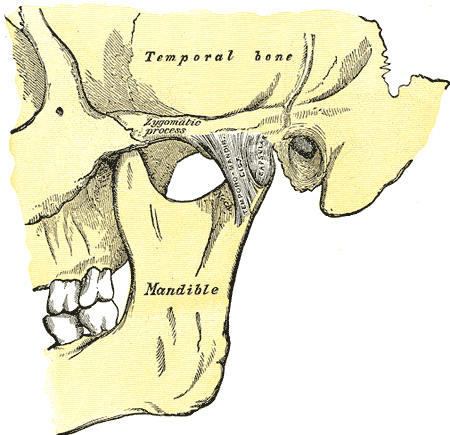
The temporomandibular joints (TMJs) are commonly referred as the jaw joints and are located in front of the ears, where the lower jaw is attached to the skull. They are the most frequently used joints of our body, and their function is responsible for the most elementary needs - eating, chewing, talking, yawning, and general mouth/mandible movement.
Lateral aspect of the left TMJ
(source wikipedia.org)
The term temporomandibular disorder (TMD) groups several disarrangements affecting the TMJs, masticatory muscles and associated structures (tendons, ligaments, blood vessels, and other tissues). The symptoms of any of these disorders include pain in the jaw and surrounding muscles (commonly extending to the neck, shoulders and back), limited mouth opening and joint noises.
Subscribe to:
Posts (Atom)